


|
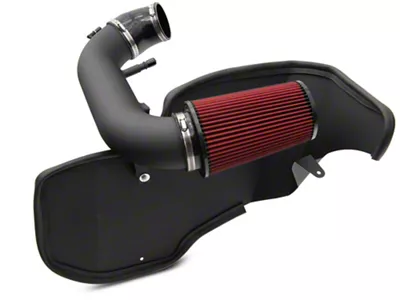
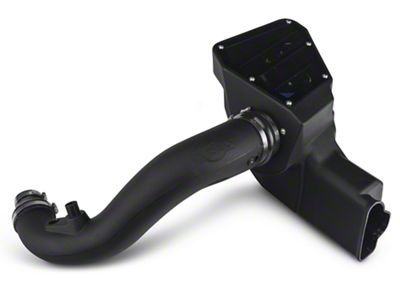
THE ALL NEW C&L 2010 MUSTANG COLD AIR INTAKE SYSTEM
We are proud to announce the availability of the FIRST complete air intake upgrade for the 2010 Mustang GT. This is the ONLY COMPLETE SYSTEM that facilitates the features of the factory "cold air" induction feed as well as the noise transmission tube, which transmits engine intake sound into the passenger cabin of the vehicle.
This upgrade package can be installed either "by itself" when ordered as a "no tune" system, or in conjunction with a performance computer re-calibration (using a Diablosport manufactured C&L Predator tuner), which enhances performance further through increased timing and revised throttle body mapping. At 1,137 CFM flow capacity, the C&L system flows 42% MORE than the factory (800 CFM) assembly. (Although the original 2010 "cold air" intake has been promoted as a factory performance item, testing has shown that there is still room for improvement.) Patent Pending.
Installation of our new system will not only transform the sound of the vehicle, giving it a much more throaty sound, but also provide a worthwhile performance improvement as well. Please read on for a detailed description of the benefits that this package, as well as detailed dyno graphs for all of the available configurations.

The 2010 Mustang GT: What is Different???
In addition to a major body re-styling and upgraded interior, the 2010 Mustang GT also received a revised "cold air" intake assembly and different computer calibration programming, which resulted in a higher factory horsepower rating of 315 HP. This is an increase of 15 HP when compared to the 300 HP rating of the 2005-2009 models. Dyno testing has shown that when compared with stock 2005 models, rear wheel horsepower is anywhere between 12 to a maximum of 15 horsepower higher on the new 2010 GT. Using three back-to-back baseline pulls, our 2010 test vehicle delivered 272, 274 and 274 SAE corrected rear wheel horsepower on a Dynojet Dynamometer. On this same dyno, stock 2005 Mustang GT's will typically measure anywhere between 260-262 SAE rear wheel horsepower. By looking at the provided dyno charts, you can see the "best" stock 2010 dyno pull being compared to the "best" results of two different 2005 GT Mustangs. The first vehicle, owned by Bill Ruffer, recorded a maximum SAE corrected HP value of 259.39 on its third baseline. The second vehicle, a 2005 GT Convertible equipped with shorty headers and a Magnaflow "axle back" exhaust, saw a maximum baseline measurement of 265.82 HP SAE corrected, also on the third and final baseline pull. Although these numbers are not much higher than a totally stock 2005 model, this is to be expected, as the mufflers and shorty headers show minimal performance improvement on these vehicles. The stock 2010 GT, owned by Mark Kennamer, recorded a peak baseline reading of 274.12 HP on it's second pull in stock configuration. The HIGHEST peak SAE reading ever measured on this particular dyno with a stock 2005 GT was 265 HP.
This improvement of 12 to 15 HP over the previous models is due to two specific changes that were implemented for the 2010 model year. The first, and most obvious, is the revised "cold air" intake assembly that flows 800 CFM, which is 45% better than the stock 2005-2009 assembly, which flowed 550 CFM. This accounts for the majority of the power increase, with the remaining difference coming from a revised ignition timing level. On 2005-2009 Mustang, peak timing advance at wide open throttle in the upper RPM's is 24 to a maximum of 25 degrees total. This would be considered a factory "safe" level of timing for 87 octane fuel. On the 2010 Mustang, timing has been advanced to 27 degrees, and in some cases it may go as high as 28 degrees at wide open throttle under load in the high RPM's. Since the vehicle is equipped with dual engine knock sensors, the computer will automatically retard the timing by as much as 5 degrees in the event that detonation is detected. 27 degrees is about as high as you can go on the factory engine without experiencing detonation and triggering the knock retard feature of the computer on low to mid grade fuel. Most aftermarket performance tunes for the 2005+ Mustang GT vehicles deliver about 30 degrees of timing for a 91 octane tune, so the potential raw horsepower performance benefit of tuning (aside from throttle control and other user adjustable features) is less than that of the previous 2005-2009 models.
A couple of very important things must be noted about the revised air intake used on the 2010 Mustang. Calling this intake a "cold air" system (as opposed to previous models) is very misleading. ALL fuel injected Mustangs, going all the way back to the first models produced in 1986, have ALWAYS drawn in fresh air exclusively from outside of the engine compartment. The temperature of the air going in to the engine on the 2010 model is not one degree cooler than that of any previous Mustang. There is a duct that feeds "fresh air" to the lower half of the factory air box assembly, but the QUALITY of the air is no different than on any previous model. Putting a "Snowflake" drawing on the lid of the factory air box and the words "COLD AIR INDUCTION" in big, bold lettering will not ever change this fact. Another piece of marketing that has caused a lot of confusion has to do with comparisons between the new 2010 air intake and the "Bullitt" assembly that was used on the special edition "Bullitt" Mustang and what Ford now sells as the "FRPP" upgrade for 2005-2009 models. Many individuals were led to believe that 2010 GT's were to be outfitted with the same assembly as the FRPP/Bullitt package. The 2010 air intake shares nothing in common with the "Bullitt" assembly, and although it DOES flow substantially better than the factory 2005-2009 intake assembly, it still flows a little less than the "FRPP/Bullitt" assembly (800 CFM versus 835 CFM).
The increase in airflow capacity is the result of a revised airflow path, which is substantially different than the previous 2005-2009 models. In order to accomplish this, Ford re-configured the engine compartment by re-locating the power steering fluid container from behind the radiator over to the front of the driver's side valve cover. This allowed the air path from the filter to the throttle body to take a much longer flowing path with a more gradual bend. The factory mass airflow diameter was also increased by 5mm as well. These changes allowed our aftermarket replacement, even one that does not require tuning, to flow better than our highest flowing "Racer" assembly that was developed for the 2005-2009 models, which is widely regarded highest performing (and best flowing) intake available for those vehicles.
Dyno Testing: C&L "No Tune" 2010 Intake Assembly 50 State Legal - ARB EO# D-640
Below you will find dyno charts for the "no tune" required version of our 2010 air intake upgrade. Testing has shown that with this system and no other changes, a solid gain of 10 rear wheel horsepower is achieved. Peak power increased from 274.12 to 284.25.
Also note that in addition to a separate torque chart, the air/fuel ratio and timing levels are provided from these runs as well, so that you can see that this improvement was achieved with the factory timing level of 27 degrees in the upper RPM's and with a safe air/fuel ratio. This is accomplished by utilizing a "no tune" insert that slips inside of the mass airflow housing. The diameter of the mass airflow housing is precisely optimized to deliver the best signal to the computer to ensure maximum performance. Because this diameter is slightly smaller than the "tune required" configuration, the total airflow capacity is slightly less (see supplied flow charts). Even with this "restriction" in place, the no-tune version of our 2010 assembly still flows better than the BEST flowing "tune required" assemblies sold for the 2005-2009 Mustang GT models.


NOW AVAILABLE! 50 State Legal - ARB EO# D-640
The "no tune" calibration insert (left) allows the C&L 2010 intake upgrade to be used without a computer re-tune, delivering an ideal air/fuel ratio and having little effect on the total airflow capacity of the system. (See flow charts and dyno results)
This "no tune" configuration is ideal for someone who is looking to improve both the sound and the performance of their vehicle without the added expense of tuning. The disadvantage to running a "no tune" intake (versus using computer tuning) is that you do not receive the crisp revised throttle response that the tune delivers, and you will not have as many options available to you in the future if you decide to perform further modifications that require computer tuning adjustments. You can always purchase the "no tune" version first and then purchase the tuning support at a later date. Just be sure that you remove the "no tune" insert from the mass airflow housing when you load the appropriate programming into the computer.
2010 C&L Air Intake Upgrade With Tuning
For those looking to completely transform the behavior of their 2010 Mustang GT, we offer a complete package which includes both our air intake upgrade and an optimized tuning solution utilizing the CL7140 Diablosport Predator. This tuner is only available directly through us, or through any of our distributors by requesting our specific (CL7140) model tuner. The operating system of this programmer is pre-loaded with over 250 C&L intake specific tunes, which covers ALL 2005-2010 Mustang GT, V6, GT500, Shelby and Bullitt model vehicles. These tunes have been tested, optimized and approved by us before being submitted to Diablosport for implementation into the CL7140 tuning device. Tunes available from the menu for the "manual" transmission model include 87, 91 and 93 octane tunes. Automatic equipped models get the same selection, but also an additional set of "Performance Transmission" tunes, which revise the transmission behavior for much firmer shifting and the automatic disabling of the traction control for optimum performance "out of the hole". If you purchase the standard U7141 Diablosport Predator tuner (or another competing brand), you will have to load a custom into the programmer for proper tuning support for the C&L upgrade air intake assembly. Existing owners of the U7141 tuner are able to purchase tuning support for this intake through us directly. Owners of tuning devices from other manufacturers (such as SCT) will need to find tuning support from any reputable tuner. If the tuner is not familiar with the tuning requirements necessary for this system, we will be happy to provide them with the necessary information.
As you can see from the supplied dyno charts below, peak power is increased between 14 to 15 rear wheel horsepower throughout the entire upper RPM range. In fact, the improvement over stock is never less than 12 rear wheel HP from 4,250 RPM all the way to redline. With tuning, the throttle response is instantaneous, and the vehicle behaves as if it has a cable actuated throttle, rather than the (sometimes noticeable) lag that occurs with the factory programming for the drive-by-wire throttle body system. The additional 4-5 HP gained through tuning is the result of increasing the maximum timing level to 30 degrees at wide open throttle. This is an appropriate level for 91 octane fuel, although some tuners like to go even higher. We did not raise the timing level any higher than this, due to the fact that our test vehicle arrived with some no-name generic premium fuel in the tank, and the knock sensor would retard the timing if we were to go any higher with the advance. Still, this is a representative improvement, and should be considered as typical for most vehicles with 91 octane or higher in the gas tank.

The CL7140 Predator tuning support has been implemented, and our programmer is now capable of tuning ALL 2010 Mustang vehicles equipped with our air intake upgrades.

This independent dyno test was performed on Herb Williams 2010 Mustang GT with custom tuning provided by Doug Studdard of Bamachips. The baseline was with just an aftermarket exhaust system, and the "after" pull shows the gains with our 2010 intake upgrade and custom tuning. Note that these gains were virtually identical to the results found on the other test vehicles shown on this page.

How does C&L Compare to our Competitors?

We recently had an individual contact us (upon the recommendation of a local dyno shop) after he was disappointed with the results he saw from a competitor's new air intake. We will call this competing air intake "Brand "R"". Out of curiosity, we decided to flow test our 2010 Mustang air intake against the Brand "R" air intake. After seeing the results first hand, the customer switched to the C&L 2010 Air Intake.
The following dyno tests were performed on that same vehicle by Aurthur Wang at Trackmasters, Inc. (www.etrackmasters.com) on the 2010 Mustang GT owned by Andre Powell. The vehicle had previously been modified with the new "Brand R" cold air intake upgrade and exhaust system. These graphs show three different configurations:
1. Brand "R" cold air intake and exhaust, factory computer programming.
2. C&L 2010 "No Tune" intake and exhaust, factory computer programming.
3. C&L 2010 intake upgrade assembly, exhaust and CL7140 Predator premium fuel tuning.
All of the configurations were tested a MINIMUM of three different pulls, and the BEST pull in each configuration is shown. When looking at the graps, make note of the timing levels and the air/fuel ratios. You will notice that in addition to our "no tune" system providing a more ideal air/fuel ratio, our system also created more average horsepower with the same level of timing. The "red" graph shows the benefits of the additional timing delivered with an air/fuel ratio that is about as close to optimum as you can get. The torque graph also shows that although "peak" horsepower is not increased greatly with the tuning, the torque in the midrange is enhanced considerably.

Note: The C&L "No-Tune" System for the 2010 Mustang GT is now available. Patent Pending.
| PART# |
APPLICATION |
PRICE |
| 10699-10-P |
C&L Air Induction System 2010 Mustang GT
| $359 |
| 10699-10-PI |
C&L Air Induction System with "no-tune" insert 2010 Mustang GT **NOW AVAILABLE
| $379 |
| 10699-10-PT |
C&L Air Induction System 2010 Mustang GT and Predator Tuner
| $699 |
| CLTUNE |
Tune for Predator to accomodate C&L Air Intake System. (Choice of 1 Octane Level tune)
| $50 |
| CLTUNE |
Tune for Predator to accomodate C&L Air Intake System. (Choice of 2 Octane Level tunes)
| $75 |
|